
Introduction
AI in digital marketing is changing the way businesses attract, engage, and convert customers. From automated campaigns to predictive analytics, artificial intelligence is no longer optional — it is becoming essential.
Companies that use AI-driven tools are improving personalization, saving time, and increasing revenue faster than competitors.
In this guide, you’ll discover 10 powerful ways AI in digital marketing can completely transform your strategy and help you stay ahead in a competitive online landscape.
Why AI in Digital Marketing Matters Today
Marketing has become data-heavy. Every click, search, and interaction generates valuable information.
AI in digital marketing helps businesses analyze this massive data quickly and make smarter decisions.
Instead of guessing what customers want, brands can now predict behavior, personalize content, and automate repetitive tasks efficiently.
The result? Better targeting and higher return on investment.
1. Smarter Customer Insights Through AI in Digital Marketing
Understanding your audience is the foundation of success.
AI tools analyze customer behavior patterns, browsing history, and purchase trends.
This allows businesses to:
- Identify high-intent users
- Segment audiences automatically
- Predict future buying behavior
With these insights, campaigns become more precise and effective.
2. Personalized Content at Scale
One of the biggest advantages of AI in digital marketing is personalization.
Instead of sending the same message to everyone, AI systems tailor emails, ads, and website experiences based on user behavior.
Examples include:
- Personalized product recommendations
- Dynamic website content
- Customized email subject lines
Personalization increases engagement and improves conversion rates.
3. AI-Powered Chatbots for Instant Support
Customer experience plays a major role in digital growth.
AI chatbots provide instant responses to customer queries 24/7.
Benefits include:
- Faster response time
- Reduced support costs
- Improved customer satisfaction
Chatbots can handle common questions, book appointments, and even recommend products.
4. Predictive Analytics for Better Campaign Decisions
AI in digital marketing allows marketers to forecast results before launching campaigns.
Predictive analytics tools analyze past data and suggest:
- Best-performing content types
- Optimal posting times
- High-converting audience segments
This reduces risk and improves campaign efficiency.
External Resource (Dofollow Example):
Google AI Blog – https://ai.googleblog.com
5. Automated Email Marketing Optimization
Email marketing remains powerful, but manual optimization takes time.
AI systems now:
- Test subject lines automatically
- Optimize send times
- Adjust content based on user behavior
This improves open rates and click-through rates without constant manual effort.
6. Advanced Ad Targeting and Bidding
Paid advertising becomes more efficient with AI.
Platforms like Google Ads use machine learning to optimize bidding strategies.
AI in digital marketing improves:
- Audience targeting
- Budget allocation
- Conversion tracking
- Real-time ad adjustments
External Resource Example:
Google Ads Smart Bidding – https://ads.google.com
7. Content Creation and Optimization
AI tools assist with:
- Blog topic generation
- SEO optimization suggestions
- Headline analysis
- Grammar and readability improvement
While human creativity remains essential, AI enhances efficiency.
Suggested Internal Link:
Link to your article on “Complete SEO Strategy Guide”
8. Voice Search and AI Assistants
Voice search is growing rapidly.
AI in digital marketing helps businesses optimize for:
- Conversational keywords
- Question-based queries
- Local search intent
Optimizing for voice search improves visibility in smart assistant results.
9. Social Media Monitoring and Automation
Managing multiple social platforms can be overwhelming.
AI tools monitor engagement, schedule posts, and analyze performance.
Benefits include:
- Identifying trending topics
- Tracking brand mentions
- Detecting sentiment analysis
- Automating responses
This helps marketers stay active without constant manual posting.
10. Fraud Detection and Data Security
Digital advertising faces risks such as click fraud and data breaches.
AI systems detect unusual patterns and prevent fraudulent activity.
By improving security and monitoring traffic, businesses protect both budgets and customer trust.
How to Implement AI in Digital Marketing Strategy
Adopting AI does not mean replacing human marketers.
Instead:
- Start with automation tools
- Use analytics platforms
- Test AI-powered ad strategies
- Integrate chatbot systems
- Monitor performance consistently
Small improvements gradually build strong AI-driven systems.
Common Mistakes to Avoid
While AI offers many advantages, avoid these mistakes:
- Relying fully on automation without human oversight
- Ignoring data privacy regulations
- Using AI tools without clear strategy
- Overcomplicating simple campaigns
AI works best when combined with clear marketing goals.
Image Suggestion for Blog
Alt Text:
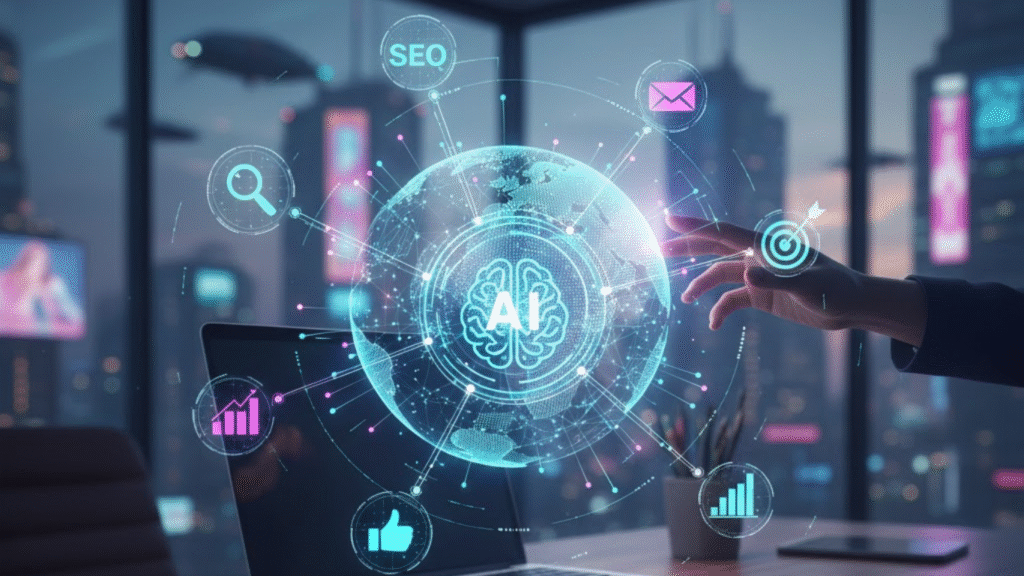
AI in digital marketing strategy illustration showing data analytics dashboard, automation tools, and online growth chart.
Final Thoughts
AI in digital marketing is transforming how brands compete online. It enables smarter targeting, better personalization, and data-driven decisions.
Businesses that adopt AI early gain a competitive advantage.
By applying these 10 powerful strategies, you can:
- Increase marketing efficiency
- Improve customer engagement
- Boost campaign performance
- Scale growth faster
The future of marketing is intelligent, automated, and data-driven.
Now is the time to integrate AI thoughtfully and strategically into your marketing plan.